What Voltage Should I Use for Vaping Top Settings?

Time:2026-10-10 Author:Ethan
0%

Choosing a suitable setting begins with a simple question: what voltage should i use for vaping? The honest answer depends on your coil resistance, device design, e-liquid, and personal comfort. Voltage is not a universal number. A 1.2-ohm mouth-to-lung coil may feel comfortable near 3.3 to 3.8 volts, while a lower-resistance coil can require a different approach. Always check the manufacturer’s recommended wattage range before adjusting anything.

Start low.

Vaping educator Phil Busardo often shares a practical rule: “Start low and work your way up.” That advice remains useful because small increases can noticeably change warmth, vapor production, flavor, and throat sensation. A dry, burnt taste usually signals excessive power or insufficient liquid reaching the coil. A cool, weak draw may suggest that the setting is too low. These signs provide useful experience, but they are not perfect measurements.

This guide explains how voltage, resistance, and wattage interact in everyday use. It also considers battery condition, airflow, coil age, and e-liquid composition. Experienced users may prefer warmer vapor, while beginners often need a gentler setting. There is room for judgment here. Even recommended ranges can feel different across devices.

Use only compatible batteries and undamaged equipment. Stop immediately if a device becomes unusually hot, leaks, or behaves unpredictably. Do not exceed the coil maker’s limits. Vaping is not risk-free, and this information cannot replace professional medical advice. Our aim is practical, cautious guidance, not a single magic number.
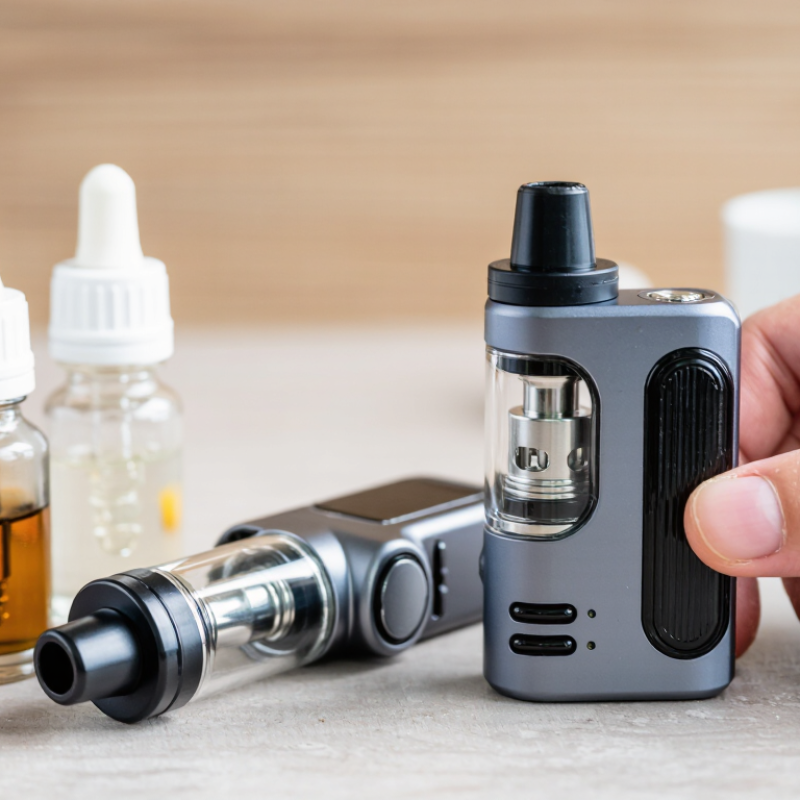
What Voltage Should I Use for Vaping Top Settings?

Understanding Voltage, Wattage, and Vape Coil Resistance

What Voltage Should I Use for Vaping Top Settings?

Understanding Voltage, Wattage, and Vape Coil Resistance

The right voltage depends on coil resistance, liquid thickness, and your preferred vapor warmth. There is no universal “top setting.” A higher voltage increases wattage, but it can also heat the coil too quickly. I usually begin near the lower end of the coil’s recommended range. Then I increase the setting gradually, using small adjustments.

Ohm’s law helps explain the relationship. Voltage equals the square root of wattage multiplied by resistance. For example, a 0.5-ohm coil at 20 watts needs about 3.2 volts. A 1.0-ohm coil at the same wattage needs about 4.5 volts. The resistance changes the required voltage significantly. Check the coil’s printed range and the device instructions before adjusting anything.

Watch the vapor and flavor carefully. A harsh taste, dry throat, or unusually hot mouthpiece may indicate excessive power. A weak, cool draw may suggest insufficient power. Stop if the coil tastes burnt. Letting the wick soak between draws can help, but it cannot repair damaged cotton. I sometimes raise the setting too quickly during testing, especially with a new coil. That mistake reminds me to make one change at a time. Battery condition, airflow, and liquid composition also affect performance, so a setting that works today may feel different tomorrow.

Choosing Voltage Based on Coil Type and Resistance

Choosing voltage starts with coil resistance, not the device’s maximum setting. Ohm’s law gives a useful check: power equals voltage squared divided by resistance. A 1.0-ohm coil at 3.0 volts produces 9 watts, while a 0.5-ohm coil at the same voltage produces 18 watts. That difference can quickly create hotter vapor, faster liquid use, or a burnt wick.

Higher-resistance mouth-to-lung coils often work gently around 2.8–3.8 volts. Lower-resistance direct-to-lung coils may need similar or slightly higher voltage, but their wattage rises much faster. Always follow the coil maker’s printed wattage range, then begin at its lower limit. Battery University identifies about 3.6–3.7 volts as the nominal range for common lithium-ion cells, with approximately 4.2 volts at full charge. That battery figure is not a safe coil setting. UL 8139 also emphasizes protection against overheating, overcharging, and abnormal operation in vaping devices. I still check resistance twice; a neat number on the screen can be wrong after a loose connection.

Tips: Begin low, take a short puff, and increase voltage in 0.1-volt steps. Stop when the flavor turns harsh, the vapor feels unusually hot, or the wick tastes dry. A 0.3-ohm coil at 3.2 volts already reaches about 34 watts. Do not exceed the stated coil range. Keep airflow open where required, and replace damaged coils. No chart is perfect, because liquid thickness, airflow, and puff length change the result.

Setting a Safe Starting Voltage for Your Vape Device

A safe starting voltage depends on coil resistance, liquid flow, and the device’s recommended operating range. Voltage alone does not determine heat. The basic relationship is power = voltage² ÷ resistance.

For example, 3.0 volts delivers 9 watts through a 1.0-ohm coil, but 18 watts through a 0.5-ohm coil. Start at the lowest setting listed for your coil, then increase slowly by 0.1-volt steps. Pause after each adjustment and check the vapor, flavor, and device temperature.

Keep the coil specifications nearby. A dry, burnt taste, harsh throat feel, or unusually hot metal indicates that the setting may be too high, or the coil may not be saturated. Stop using it briefly and allow the wick to absorb liquid. This sounds simple, but rushed adjustments cause many avoidable problems.

Do not guess when the resistance reading changes sharply. Replace damaged components and use only compatible, certified batteries and chargers.

Safety deserves more weight than cloud size. The U.S. Fire Administration’s Electronic Cigarette Fires and Explosions report documented 195 incidents and 133 injuries from 2009 to 2016. The report linked many events to battery failure during charging or use.

UL Research Institutes also emphasizes protection against overheating, short circuits, and mechanical damage in lithium-ion systems. These sources do not provide one universal voltage. They support a cautious method: follow the manufacturer’s range, begin low, monitor heat, and stop when performance becomes unstable. My own practical mistake was treating a “normal” voltage as automatically safe. Resistance changes the answer.

Adjusting Voltage for Flavor, Vapor, and Smoothness

What Voltage Should I Use for Vaping Top Settings?

A voltage setting is not universal; it depends on coil resistance, liquid thickness, airflow, and personal preference. I begin at the lowest recommended level printed for the coil. Then I raise voltage in small steps, usually 0.1 to 0.2 volts. This slower approach protects flavor and makes changes easier to notice. Still, my first adjustment was too aggressive once. The vapor became hot, and the taste turned dry within a few draws. That mistake reminded me that more power is not automatically better.

For richer flavor, moderate voltage often preserves delicate notes instead of flattening them with heat. If vapor feels thin, increase slightly and take a slower, steadier draw. For denser clouds, a higher setting may help, but airflow must keep the vapor comfortable. A tight airflow and high voltage can feel harsh quickly. Watch for crackling, burnt taste, or a heating coil that stays hot between draws. Those are warning signs, not targets. Stop and let the device cool.

Smoothness also depends on the liquid reaching the coil fast enough. After several long draws, pause briefly so the wick can absorb more liquid. I sometimes chase stronger flavor and lose smoothness, which is a useful correction. Record the setting that feels balanced, rather than copying someone else’s number. Use only the coil’s stated voltage range, and inspect the device if performance changes suddenly.

Recognizing Signs of Excessive or Insufficient Voltage

Choosing a suitable voltage depends on coil resistance, airflow, liquid thickness, and the device’s recommended range. Start near the lower end of that range, then increase gradually. Small changes matter.

Excessive voltage usually appears through warning signs. The vapor may become unusually hot, sharp, or dry. A burnt taste can develop quickly, especially when the wick is not fully saturated. You may also notice throat irritation, darkened liquid, or a coil that heats unevenly. Stop using the device if it becomes dangerously hot, leaks near the battery, or shows physical damage. Do not try to overpower these symptoms.

Insufficient voltage creates a different experience. Vapor may feel cool and thin, while flavor becomes faint or watery. A flooded coil can produce bubbling, spitback, or condensation around the mouthpiece. Raising voltage slightly may help, but only when the coil remains within its stated limits. Waiting several seconds between adjustments allows the wick to resaturate. That detail is easy to miss. I would also avoid judging performance from one short puff; airflow and puff length change the result. Even careful testing can be imperfect, so record settings and stop when the vapor feels harsh rather than chasing maximum output.

FAQS

Is there one “top” voltage setting for every vaping device?

No. The right setting depends on coil resistance, liquid thickness, airflow, and preferred vapor warmth. Start low.

How does coil resistance affect voltage and wattage?

Power equals voltage squared divided by resistance. At 3.0 volts, a 1.0-ohm coil produces 9 watts.

What voltage should I use when starting with a new coil?

Begin at the lowest setting printed for the coil. Increase voltage by about 0.1 volts at a time. Pause after each adjustment and check the vapor.

What voltage range may suit higher-resistance coils?

Higher-resistance mouth-to-lung coils often operate gently around 2.8–3.8 volts. The printed coil range remains more important than a general estimate.

What signs show that the voltage is too high?

Harsh flavor, a dry throat, hot vapor, or an unusually warm mouthpiece can indicate excessive power. Stop if the coil tastes burnt. That taste matters.

Can a dry wick recover after tasting burnt?

Letting the wick absorb liquid may help when it is only temporarily dry. It cannot repair cotton that has already burned. Replace damaged coils.

Why can the same voltage feel different on different days?

Airflow, battery condition, liquid thickness, coil age, and puff length all affect performance. A setting that works today may feel hotter tomorrow. My earlier assumption was too simple.

Is the battery’s voltage rating the same as the coil’s safe setting?

No. A common lithium-ion cell may show about 3.6–3.7 volts nominally and about 4.2 volts when fully charged. Those figures do not define a safe coil setting.

What should I do if the resistance reading changes sharply?

Stop adjusting the voltage and check the coil connection. A loose connection can create an inaccurate reading. Do not guess. Replace damaged components when necessary.

Which safety habits should I follow while adjusting voltage?

Use compatible, certified batteries and chargers. Avoid damaged batteries, overheating, short circuits, and abnormal device behavior. Keep airflow open when required, and prioritize stable performance over larger clouds.

Conclusion

Choosing the right setting begins with understanding how voltage, wattage, and coil resistance work together. The question “what voltage should i use for vaping” does not have one universal answer because the ideal level depends on the coil’s resistance, material, and recommended range. Higher-resistance coils generally need less power, while lower-resistance coils may require more, but always begin at the lowest suggested setting for your device and coil.

Increase the voltage gradually in small steps while checking flavor, vapor production, warmth, and smoothness. A balanced setting should provide satisfying performance without harshness or excessive heat. Burnt or dry-tasting vapor, unusual heat, popping, or rapid liquid use can indicate excessive voltage. Weak flavor, cool vapor, or poor vapor production may suggest that the setting is too low. If discomfort or irritation occurs, stop using the device and review its instructions. Never exceed the coil or device limits, and replace damaged components promptly.

Ethan

Ethan

Ethan is a seasoned marketing professional with a deep expertise in our company's innovative product line. With a passion for sharing knowledge and insights, he takes the lead in regularly updating our corporate blog, where he explores industry trends, product features, and effective marketing......