As the debate intensifies, many ask: are refillable cartridges better than disposable ones? This topic is crucial in our conscious efforts to preserve the environment. Refillable cartridges offer an alternative to single-use plastics, which significantly contribute to pollution. Users frequently report satisfaction with the lifespan and value of refillable options. However, the initial costs might deter some buyers.
Environmental concerns drive the discussion forward. Disposable cartridges create excessive waste, while refillables promise a reduction in landfills. Yet, one must consider the reliability of refillable systems. Many users worry about leaks or compatibility issues. Additionally, the refill process can feel burdensome for those eager for convenience.
In exploring this issue, we uncover both sides of the argument. It’s essential to weigh personal experiences against expert recommendations. While experiences may vary, understanding the facts will guide our choices. For many, the choice between refillable and disposable cartridges is more than a preference; it's a reflection of values and responsibility towards the planet.
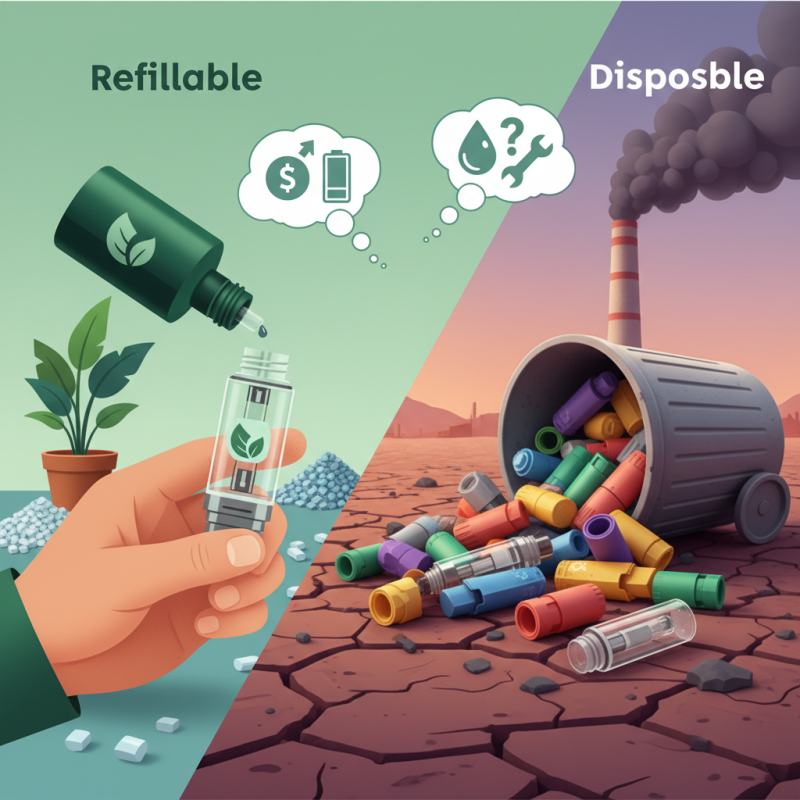
Refillable cartridges are gaining attention in today’s printing world. A study from Smithers Pira found that refillable cartridges can reduce waste by up to 60%. This significant reduction in landfill contribution highlights their eco-friendliness. Consumers are increasingly eco-conscious, and using refillable options aligns with sustainable practices.
The cost-effectiveness of refillable cartridges is another key benefit. Research by MarketWatch indicates that they are generally 30-50% more economical over time. Users save on replacements and reduce frequency in purchasing. However, some may find the initial investment higher. This cost can be a barrier for those who are uncertain about long-term savings or maintenance efforts.
Moreover, refillable cartridges offer better print quality and performance. Many users report consistent, vibrant results. Yet, a downside is the potential for user error during refilling. Missteps in the process can lead to leaks or inconsistent print quality. Users should carefully follow instructions to minimize issues. This factor requires a learning curve, but the rewards may outweigh the risks for dedicated users.
| Feature | Refillable Cartridges | Disposable Cartridges |
|---|---|---|
| Cost-Effectiveness | Lower long-term costs due to refilling | Higher costs over time; need frequent replacements |
| Environmental Impact | Reduced waste and environmental footprint | Increased waste; contributes to landfills |
| Performance | Often comparable or better performance | May vary; quality can degrade over time |
| Convenience | Requires a bit more effort to refill | Easy and quick to replace |
| Customization | Allows for custom ink or toner mixes | Limited to pre-set options |
: Refillable cartridges can reduce waste by up to 60%, helping lessen landfill contributions significantly.
Yes, they are typically 30-50% cheaper over time, leading to savings on replacements.
Some users may find the upfront investment higher, which can deter those unsure about long-term savings.
Refillable cartridges often provide sharper images and deeper colors, especially with high-quality ink.
Yes, users may face errors during the refilling process that can lead to leaks and inconsistent print quality.
Yes, experiences differ; some may face clogging or flow issues, impacting print results.
It's vital to evaluate the type of ink and maintenance needed for optimal performance.
Yes, they are pre-filled and ready to use, appealing for users who prefer hassle-free printing.
They often favor cost efficiency, which can lead to lower resolution prints and faded colors.
Individual needs and expectations significantly impact printing results with both types of cartridges.
The article "Are Refillable Cartridges Better Than Disposable Ones? 5 Best Reasons" explores the advantages of using refillable cartridges in comparison to their disposable counterparts. One of the primary benefits is cost-effectiveness; over time, refillable cartridges offer substantial savings, making them a more economical choice for consumers. Furthermore, they contribute positively to the environment by significantly reducing waste associated with single-use cartridges.
In addition to financial and environmental benefits, the article discusses the performance quality of refillable cartridges, often matching or surpassing that of disposable options in terms of print quality. Lastly, it highlights the convenience and availability of refillable cartridges, making them an appealing option for many users. Overall, the discussion addresses the vital question: are refillable cartridges better than disposable ones? Based on the outlined benefits, refillable cartridges emerge as a superior choice for both economic and ecological reasons.

 Xyvo Vape