When buyers search “China Top Refillable or Disposable Cartridges Better?”, they usually want more than a low unit price. They want dependable performance, cleaner maintenance, and predictable long-term costs. The real question is: are refillable cartridges better than disposable ones?
The answer depends on the application. Refillable cartridges can reduce packaging waste and support repeated use. They may also lower costs for high-volume users. However, refilling requires careful cleaning, correct ink or liquid compatibility, and consistent handling. A small seal failure can create leaks, stains, or interrupted production.
Disposable cartridges offer convenience. Operators can remove an empty unit and install a sealed replacement within minutes. This can help busy workshops, small businesses, and users who value consistency over reuse. Yet frequent disposal may increase material waste and replacement expenses. The environmental result is not always obvious.
Industry sustainability specialist Steve Haskew has noted, “The better cartridge is the one that reduces waste without creating more service problems.” That practical view matters. A refillable design is not automatically greener if it causes failed prints, wasted materials, or repeated cleaning cycles.
China’s cartridge suppliers now provide both options, including refill ports, transparent reservoirs, recycled plastics, and improved sealing systems. Buyers should check compatibility, refill life, warranty terms, leakage testing, and after-sales support. Supplier documentation matters. So does real usage data.
There is no universal winner.
This comparison will examine cost, reliability, maintenance, environmental impact, and user experience. It will also question a common assumption: cheaper per unit does not always mean better value.
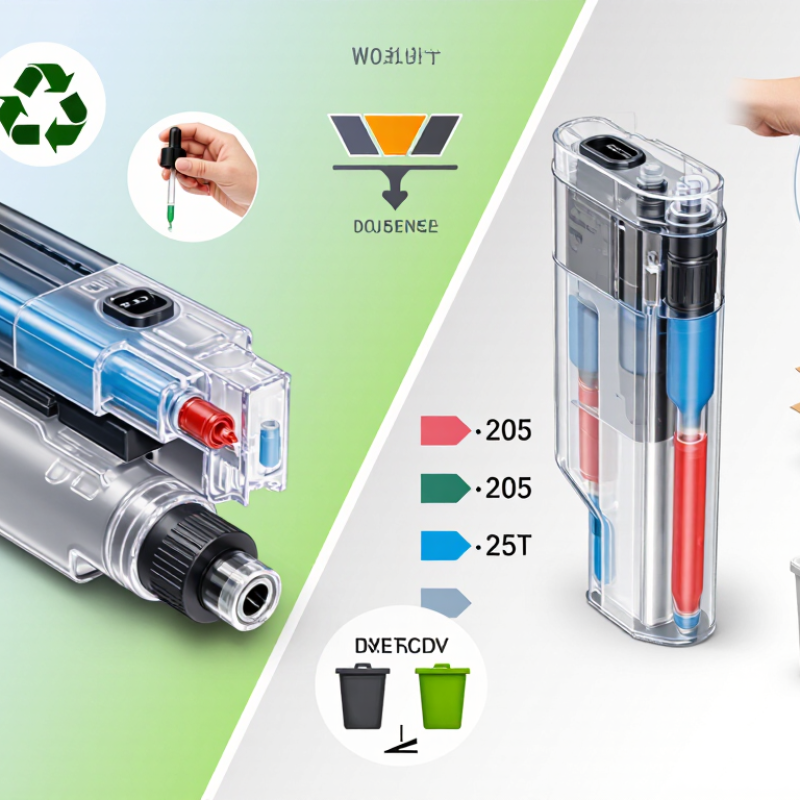
Refillable and disposable cartridges serve different practical needs. A refillable cartridge has a reusable tank, coil, mouthpiece, and filling port. Users add compatible liquid after cleaning and inspection. A disposable cartridge arrives prefilled and is discarded when empty or damaged. It usually needs less handling. That sounds simple, but quality depends on sealing, airflow, material safety, and production control. Small leaks can stain packaging. Poorly fitted parts may cause uneven vapor or unwanted taste.
The Global E-waste Monitor 2024 reported 62 million tonnes of electronic waste worldwide in 2022. It projects this figure could reach 82 million tonnes by 2030. Disposable cartridges add a small but visible stream of mixed plastic, metal, and electronic waste. Refillable designs may reduce replacement waste, yet their cleaning and refill steps require careful user control. Grand View Research estimated the global e-cigarette market at about 24 billion US dollars in 2023, showing continued demand for cartridge-based products. Market size does not prove better performance. It only shows scale.
In manufacturing evaluations, check food-contact or inhalation-contact material documentation, batch traceability, leak testing, and recycling instructions. These details matter more than appearance. Refillable units are not automatically greener. Disposable units are not automatically safer. Data can support a choice, but it cannot replace testing. That part is often overlooked.
| Comparison Dimension |
Refillable Cartridges Reusable Cartridge System |
Disposable Cartridges Single-Use Cartridge System |
|---|---|---|
| Definition | A cartridge designed to be filled repeatedly with compatible e-liquid until the cartridge, coil, or seals reach the end of their service life. | A prefilled cartridge intended to be removed and discarded after the supplied e-liquid is used or the cartridge performance declines. |
| Typical E-Liquid Capacity | Commonly about 0.5–2.0 mL, depending on the device format and applicable market regulations. | Commonly about 0.5–2.0 mL for prefilled cartridges, although capacity varies by product design and local regulations. |
| How It Is Used | Open the filling port, add compatible e-liquid, close the port securely, and allow the coil to saturate before use. | Install the sealed cartridge and use it until the e-liquid is depleted or the cartridge no longer produces satisfactory vapor. |
| Refilling Requirement | Requires a separate e-liquid bottle and careful filling to reduce leakage, overfilling, and contamination. | No refilling is required during normal use, which makes operation simpler and more consistent for many users. |
| Flavor Selection | Users can change e-liquid flavors and nicotine strengths, provided the liquid is compatible with the device. | Flavor and nicotine strength are selected when purchasing the prefilled cartridge; changing options requires another cartridge. |
| Coil or Heating Element | May use an integrated coil that requires replacing the complete cartridge, or a replaceable coil depending on the system. | The heating element is normally integrated into the sealed cartridge and is discarded with the cartridge. |
| Approximate Service Pattern | One cartridge can often be refilled multiple times, but actual service life depends on liquid composition, usage frequency, coil design, and maintenance. | One cartridge is used for a single product cycle. Actual duration depends on capacity, puff duration, airflow, and user behavior. |
| Upfront Cost | Usually requires an initial device and cartridge purchase, plus e-liquid and possible replacement cartridges or coils. | Usually has a simpler purchase structure because the cartridge is supplied prefilled, but repeated replacement costs can accumulate. |
| Long-Term Cost | Can be more economical for frequent users because e-liquid is purchased separately and the cartridge may be reused. | Can be less economical for frequent users because a new prefilled cartridge is needed after each product cycle. |
| Convenience | Offers greater control over e-liquid choices but requires filling, cleaning, storage, and occasional maintenance. | Offers high convenience because there is no routine filling or coil maintenance. |
| Leakage Considerations | Leakage risk may increase if the filling port, seals, airflow path, or cartridge is damaged or improperly closed. | Factory-sealed construction can reduce handling-related leakage, although leakage may still occur because of heat, pressure, damage, or storage conditions. |
| Waste Generation | Generally produces less cartridge waste because the cartridge body can be reused, although empty e-liquid bottles and worn components still require disposal. | Generates more frequent waste because the cartridge, heating element, and residual materials are discarded after use. |
| Environmental Considerations | Reuse can reduce the number of cartridge bodies entering the waste stream. Proper disposal of e-liquid containers and damaged components remains necessary. | Single-use disposal increases material waste. Products containing batteries or electronic components require appropriate collection and recycling where available. |
| Quality Consistency | Performance can vary with filling technique, e-liquid viscosity, coil saturation, and cleaning habits. | Factory-filled units can provide more consistent initial filling and assembly, but performance may vary between production batches and storage conditions. |
| Portability | Users may need to carry an e-liquid bottle or spare cartridge when traveling or using the device for extended periods. | Easy to carry because no separate e-liquid bottle is normally required for routine use. |
| Best Suited For | Users who value flavor flexibility, lower potential long-term operating cost, and reduced cartridge waste. | Users who prioritize simplicity, quick replacement, and minimal routine maintenance. |
| Selection Recommendation | A practical choice when refill access, e-liquid customization, and repeated use are more important than maximum convenience. | A practical choice when ease of use, sealed handling, and fast cartridge replacement are more important than reuse and waste reduction. |
Note: Capacity, compatibility, nicotine limits, labeling requirements, and disposal rules vary by product and jurisdiction. Always verify local regulations and follow the manufacturer’s instructions for filling, storage, use, and disposal.
Both usually contain a liquid chamber, absorbent material, heating element, and mouthpiece. A sensor or button activates the heater. The heater creates an aerosol.
A refillable cartridge has a tank that users open, fill, and close. Its performance depends on clean filling, suitable liquid thickness, and a reliable seal. Small mistakes can cause leaks.
A disposable cartridge arrives prefilled and is discarded after reaching its intended limit. It usually emphasizes sealed construction, battery safety, and stable storage life. Convenient, but less flexible.
Disposable cartridges require less handling during daily use. Refillable cartridges need cleaning, careful filling, and occasional seal replacement. Rushed mornings expose this weakness.
Refillable cartridges may cost less over frequent use. However, replacement parts, damaged tanks, and leftover liquid add expenses. The calculation is not always simple.
Incorrect filling may cause leakage, poor airflow, or device damage. A cartridge can pass inspection yet fail after several days. That gap deserves attention.
Request material information, test records, batch details, and clear safety instructions. Check seals, compatibility, liquid information, and recycling guidance. Specifications alone are insufficient.
Disposable cartridges may suit travel and users who dislike maintenance. Refillable cartridges may suit experienced users who value control and lower packaging use. Neither choice is perfect.
Follow local disposal and recycling rules for batteries, containers, and leftover liquid. Do not discard damaged units carelessly. Responsible handling matters.
Choosing between refillable and disposable cartridges in China depends on cost, convenience, usage habits, and maintenance preferences. Refillable cartridges are designed to be used multiple times with compatible liquid, while disposable cartridges are replaced after their contents are used. In general, refillable options may reduce long-term expenses and create less waste, but they require regular cleaning, careful refilling, and proper storage. Disposable cartridges are simpler and more convenient, especially for occasional users, although repeated replacement can become more expensive over time.
Performance and compatibility also matter. Refillable cartridges may offer more flexibility and better value when users can find suitable materials and compatible devices, while disposable cartridges provide a consistent, ready-to-use experience with minimal maintenance. So, are refillable cartridges better than disposable ones? There is no universal answer. Budget-conscious and frequent users may prefer refillable designs, while travelers, beginners, or those prioritizing convenience may find disposable cartridges more suitable. The best choice should consider personal needs, product compatibility, waste reduction, and responsible use.

 Xyvo Vape