Vape cartridges need more than a drawer and a hopeful guess. Heat, sunlight, moisture, and careless handling can affect their condition. This guide explains how to store vape cartridges properly using simple, practical habits. It focuses on product care, manufacturer guidance, and responsible storage for legal, commercially available products.
A cool, dry, and shaded place is usually the safest starting point. Keep cartridges away from radiators, car dashboards, windowsills, and steamy bathrooms. A stable room-temperature cabinet works better than a warm backpack. Store each cartridge upright when possible, with its mouthpiece protected from dust. Avoid leaving cartridges loose beside keys, coins, or tools. Small scratches and pressure damage are easy to overlook.
Original packaging can provide useful protection and important product information. Keep labels readable, and check the manufacturer’s storage instructions before using another method. Store cartridges away from children, pets, food, and direct handling by unauthorized users. If a cartridge leaks, cracks, smells unusual, or shows visible contamination, do not use it. Follow local disposal guidance instead.
There is no perfect storage routine. Some advice online sounds confident but lacks reliable evidence. A quick weekly check may prevent avoidable problems. Look for changes in appearance, damaged seals, or sticky residue around the connection area. Better storage cannot repair an already compromised product. It only reduces unnecessary exposure and helps preserve the cartridge’s intended condition.
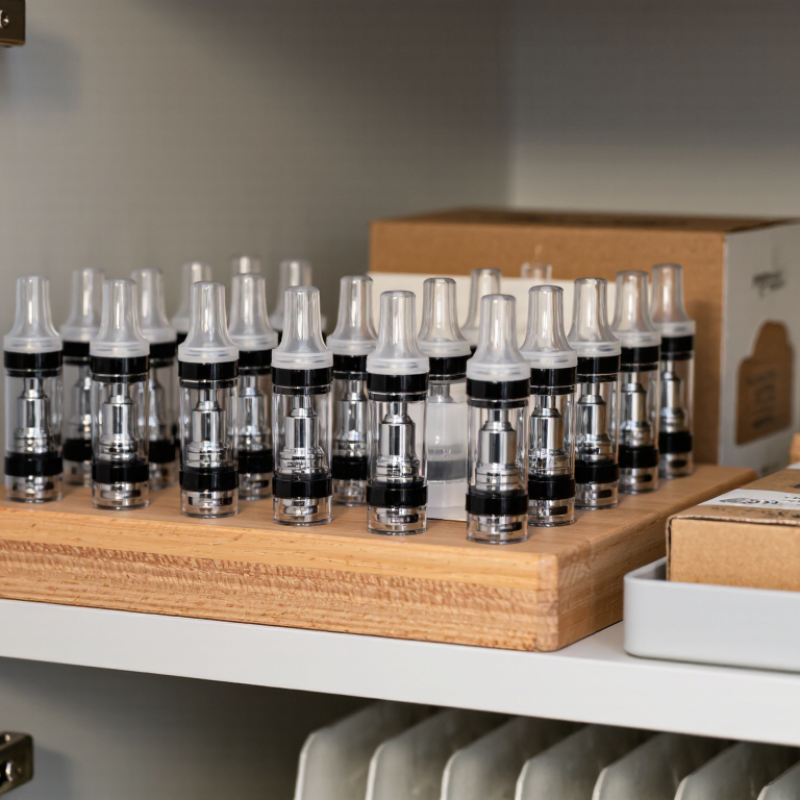
Choosing a suitable storage location begins with stability, not convenience. Keep cartridges in a cool, dry cabinet away from windows, radiators, ovens, and direct sunlight. A steady room temperature is preferable to a place that becomes hot during the day. Avoid bathrooms, kitchens, and car interiors because humidity and heat can change quickly. Not the glove box.
Store each cartridge upright, with its protective cap or seal firmly in place. This position helps reduce leakage around the connection area, especially when cartridges are moved often. Use a clean, rigid container that cannot be crushed in a bag or drawer. Keep the container separate from coins, keys, and other metal objects. Children and pets should never have access to the storage area. A lockable cabinet is more dependable than a high shelf alone.
Before storage, inspect the cartridge for cracks, residue, swelling, or a damaged mouthpiece. Do not use a damaged or leaking cartridge; follow the disposal guidance provided with the product. Refrigeration may seem sensible, but condensation can create another problem when the cartridge warms. I would also check the storage spot weekly, although this habit is easy to forget. That small oversight deserves attention. When instructions differ, the product’s official guidance should take priority over general advice.
Preparing Cartridges Before Storage
A clean cartridge is easier to store safely. Wash and dry your hands before handling it. Check the mouthpiece, seal, and outer shell for cracks, residue, or unusual looseness. Do not store a damaged or leaking cartridge. Place it aside for proper disposal under local waste guidance.
Wipe the outside with a dry, lint-free cloth. Avoid water, alcohol, and other liquids near the opening. If the cartridge separates from its device, detach it gently. Replace any protective cap firmly. Keep the cartridge upright, so liquid does not collect around the mouthpiece or connection area. Label the storage date if several cartridges look similar.
Keep the container cool, dry, and dark. A locked cabinet is better than a windowsill, car, or bathroom shelf. Store cartridges away from children, pets, food, and direct heat. I once treated storage as a quick task and skipped the inspection. That small mistake made an old cartridge harder to identify later. The label should include the product type and date, but not unnecessary personal information. Avoid stacking heavy objects on top. Check the container occasionally for leaks, swelling, or odor. If anything seems different, stop handling it casually and follow the manufacturer’s disposal guidance.
Recommended preparation actions before storing a vape cartridge. A value of 1 means the action is recommended; 0 means it is generally not recommended.
Before storage, inspect the cartridge for leaks or damage, wipe the exterior, keep the mouthpiece covered, and store it upright in a cool, dry, dark place. Routine refrigeration is not recommended because temperature changes can cause condensation.
Temperature and humidity strongly affect cartridge condition during storage. Keep cartridges in a cool, dry indoor space, away from windows, heaters, and direct sunlight. A practical starting range is 15–25°C with moderate humidity, around 40–60%. Always follow the product’s storage instructions, because materials and seals can vary.
Store each cartridge upright in a clean, protective container. This position helps reduce pressure on the seal and limits possible leakage. Avoid refrigerators and freezers. Temperature changes may create condensation inside or around the cartridge. I once assumed colder storage was always safer, but moisture can cause more problems than warmth.
Inspect the cartridge before use. Do not use one with cracks, unusual odors, damaged seals, or visible leakage. Keep storage areas inaccessible to children and pets.
Tips: Use a small digital thermometer and hygrometer for regular checks. Keep cartridges in their original protective packaging when possible. Do not store them beside food, cleaning chemicals, or loose metal objects. If the room feels damp, move the container to a drier location. Perfect conditions are difficult to maintain, so steady conditions matter more than constant adjustments.
How to Store Vape Cartridges Properly?
Light, air, and impact can gradually change a cartridge’s condition. Store cartridges in a cool, dark drawer, away from windows and heaters. ICH Q1B(R2) photostability guidance uses 1.2 million lux hours and 200 watt-hours per square metre of near-ultraviolet exposure during testing. Home storage is not a laboratory, but the message is practical: sunlight is not harmless. An opaque, dry container adds useful protection.
Air matters too. Keep each cartridge sealed until use, and avoid leaving it attached to a device for long periods. Oxygen can affect exposed liquids, while dust may enter the mouthpiece. USP General Chapter <659> identifies protection from light, moisture, and contamination as important packaging considerations. Do not store cartridges in a bathroom, car, or loose pocket. Temperature changes can also create leaks.
Physical damage is easier to overlook. Place cartridges upright when possible, with the mouthpiece covered and the connector protected. A small padded case helps prevent cracks, crushed seals, and bent contacts. Check for leaking, cloudiness, unusual odor, or damaged packaging before use. Do not use a compromised cartridge. I have found that “cool” is often interpreted too loosely; a refrigerator may introduce condensation. A stable room-temperature location is usually more sensible. These practices support product quality, but they cannot correct poor manufacturing or expired storage conditions.
Before using a vape cartridge, inspect it under clear light. Check the mouthpiece, seal, and liquid chamber for cracks, dust, or leakage. The liquid should look consistent, not unusually dark, cloudy, or separated. A burnt smell is a warning sign. Do not taste or test a questionable cartridge. Remove it from use instead.
The National Academies’ 2018 report reviewed more than 800 scientific studies on vaping products. It found that aerosols may contain nicotine, ultrafine particles, and potentially harmful chemicals. This supports careful handling, even when a cartridge looks normal. The U.S. Food and Drug Administration also advises users to avoid damaged components and keep devices away from heat and metal objects. A swollen seal or sticky connection deserves attention. My own practical lesson is simple: visual checks help, but they cannot confirm internal safety.
Tips: Wipe the connector with a dry, lint-free cloth. Store cartridges upright in a cool, dry place. Keep them sealed until use. Never use one with a cracked body, loose mouthpiece, or persistent leakage. Do not rely only on appearance. Some damage stays hidden. If storage conditions were hot, wet, or uncertain, replacing the cartridge is the more cautious choice. Keep all cartridges away from children and animals, and follow local disposal guidance.
| Storage or Inspection Dimension | Recommended Condition or Check | Why It Matters | Action Before Use |
|---|---|---|---|
| Temperature | Keep cartridges in a cool, stable environment, preferably around 15–25°C (59–77°F). | Excessive heat can thin the liquid, increase leakage risk, and accelerate degradation. | Allow a cartridge exposed to heat or cold to return gradually to room temperature. Do not heat or freeze it deliberately. |
| Light Exposure | Store away from direct sunlight and strong artificial light, ideally in an opaque drawer or container. | Light and heat may affect the color, flavor, and stability of the contents. | Do not use a cartridge with unexpected darkening, unusual cloudiness, or a significant change in appearance. |
| Humidity and Water | Keep the cartridge dry and protected from condensation, bathrooms, kitchens, and other damp areas. | Moisture can damage electrical contacts, packaging, and the cartridge structure. | Wipe only the exterior with a clean, dry, lint-free cloth. Discard it if liquid has entered the electrical connection. |
| Position | Store upright with the mouthpiece facing upward whenever possible. | An upright position helps limit liquid movement toward the mouthpiece or connection. | Place the cartridge upright for a short period before inspection and use, especially after transport. |
| Protective Packaging | Keep protective caps, seals, and original packaging in place until the cartridge is ready to use. | Packaging reduces exposure to dust, air, light, and accidental contact. | Do not use a cartridge if the seal is broken, missing, or visibly contaminated before opening. |
| Children and Pets | Keep cartridges locked or stored in a secure location inaccessible to children and pets. | Vape liquids may contain nicotine, which can be poisonous if swallowed or absorbed through skin. | If a cartridge leaks or is swallowed, avoid contact with the liquid and seek urgent medical or poison-control advice. |
| Cartridge Body | Inspect for cracks, dents, punctures, swelling, loose components, or other physical damage. | Damage can cause leakage, poor connection, or unsafe operation. | Do not use, refill, repair, or puncture a damaged cartridge. Dispose of it according to local electronic-waste requirements. |
| Liquid Leakage | Check the mouthpiece, seams, base, and connection area for wetness or sticky residue. | Leaking liquid can irritate skin and may damage the battery or electrical contacts. | Do not inhale from a leaking cartridge. Isolate it, avoid skin and eye contact, and clean the device connection carefully. |
| Mouthpiece | Confirm that the mouthpiece is clean, intact, and free from dust or foreign material. | Blockages or contamination can affect airflow and hygiene. | Clean the outside only. Do not insert sharp objects or pour cleaning liquid into the mouthpiece. |
| Liquid Appearance | Look for unexpected particles, separation that does not clear after gentle handling, or unusual cloudiness. | Visible changes may indicate contamination, aging, or exposure to unsuitable conditions. | Stop using it if the appearance is abnormal or differs substantially from its original condition. |
| Odor and Flavor | Check for a sharply burnt, chemical, rancid, or otherwise unfamiliar odor or taste. | An unusual odor or taste can signal deterioration, contamination, or a dry heating element. | Stop immediately if the taste or smell is abnormal. Do not continue testing the cartridge. |
| Electrical Connection | Ensure the connection area is dry, clean, and free from visible residue before attaching it to a compatible device. | Residue or moisture may interfere with contact and cause device malfunction. | Do not force the cartridge into the device. Remove it if it becomes unusually hot, produces abnormal sounds, or fails to connect properly. |
| Storage Duration | Follow the date and storage instructions printed on the product packaging; avoid keeping cartridges beyond the stated shelf life. | Shelf life depends on the formulation, container, seal, and storage conditions. | Do not use an expired, unmarked, or poorly identified cartridge when its contents or storage history cannot be verified. |
| Transport | Use a rigid protective case and keep cartridges away from direct sun, excessive vibration, and loose objects. | Impact and pressure can damage the cartridge or break its seal. | Inspect the cartridge again after travel for cracks, leakage, loose parts, or temperature-related changes. |
Safety note: If a cartridge is damaged, leaking, contaminated, unusually hot, or significantly changed in appearance, do not use it. Store and dispose of vape products in accordance with local regulations.
Wash and dry your hands before handling it. Check the mouthpiece, seal, and outer shell for cracks, residue, or looseness. Wipe the outside with a dry, lint-free cloth. Do not use water or liquids near the opening.
No. Do not store cartridges with cracks, swelling, leaks, unusual odors, or damaged seals. Set the item aside carefully and follow local disposal guidance. Do not keep using it casually.
Store each cartridge upright. This helps reduce pressure around the seal and mouthpiece. Keep the protective cap firmly attached. Avoid stacking heavy objects above it.
A stable indoor space around 15–25°C is a practical starting range. Moderate humidity near 40–60% is also helpful. Use a small thermometer and hygrometer if available. Steady conditions matter more than constant adjustments.
Cold storage may create condensation during temperature changes. Moisture can affect seals, openings, and nearby connections. I once assumed colder always meant safer. That assumption was not reliable.
Keep cartridges in a cool, dark drawer or opaque container. Avoid windowsills, heaters, cars, and bright sunlight. Keep each cartridge sealed until use. Do not leave it attached to a device for long periods.
Use a clean, dry, locked cabinet when possible. Keep cartridges away from children, pets, food, cleaning chemicals, and loose metal objects. Do not use bathroom shelves or loose pockets. A small padded case can prevent crushed seals and bent contacts.
Yes, especially when several cartridges look similar. Write the product type and storage date on the label. Avoid adding unnecessary personal information. Inspect the container occasionally for leaks, swelling, or unusual odors.
Learning how to store vape cartridges properly helps preserve their condition and supports a consistent experience when they are used. Choose a cool, dry, secure location away from direct sunlight, heat sources, moisture, children, and pets. Before storage, keep each cartridge upright, check that it is clean and undamaged, and make sure protective caps or seals are firmly in place. Avoid storing cartridges in places with frequent temperature changes, such as vehicles, bathrooms, or windowsills.
For best protection, place cartridges in a clean, padded container that limits exposure to light, air, dust, and physical impact. Do not stack heavy objects on top of them, and avoid freezing or excessive heat, as extreme conditions may affect the cartridge materials and contents. Before use, inspect each cartridge for cracks, leakage, unusual odor, discoloration, or other signs of damage. If any problem is found, do not use it; dispose of it responsibly according to applicable local requirements.

Xyvo Vape